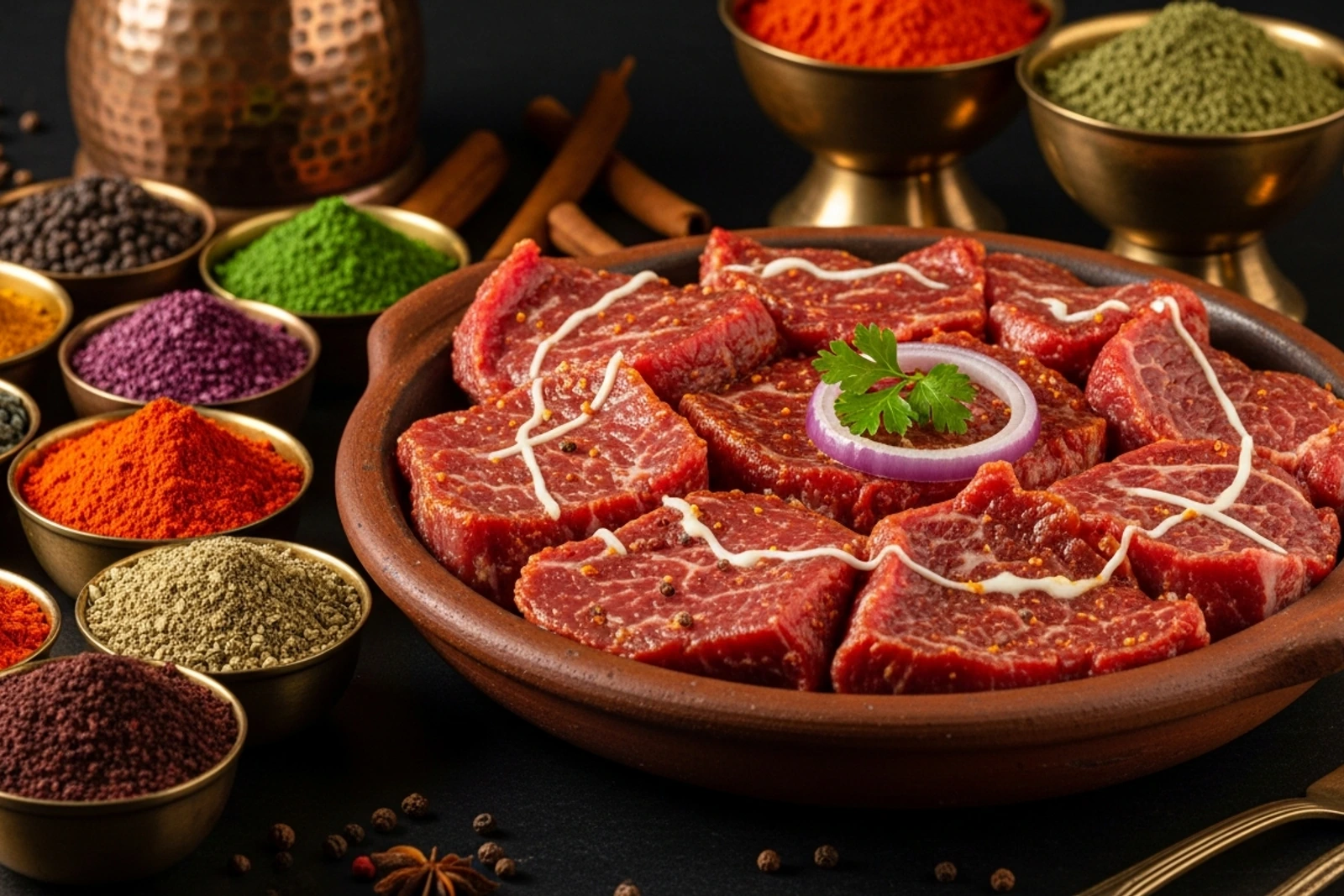
Every ingredient in this recipe was chosen for a reason. Here's a deeper look at the key components — their origins, how to select them, and why they matter to the finished dish.
beef sirloin or chuck
The first and most important ingredient in this recipe, beef sirloin or chuck has been a staple of Indian cooking for centuries. Its character — the way it responds to heat, how it interacts with fat and acid — defines the dish's fundamental flavour identity.
Selection: When buying beef sirloin or chuck, look for the markers that indicate freshness and quality. For fresh produce, these are colour saturation, firmness, and fragrance. For dried ingredients, sealed packaging, recent roasting or processing dates, and well-regarded source regions all matter. The best version of any ingredient, within your budget, directly improves the finished dish.
Nutritional profile: This ingredient contributes meaningful nutrients — including those that support the specific health benefits most associated with Indian cooking. Consumed as part of a balanced diet that includes the full variety of whole foods, its contribution to vitamins, minerals, fibre, and phytonutrient intake is real.
olive oil
olive oil plays a specific supporting role in this recipe, contributing depth of flavour and aromatic complexity that would be noticeably absent if omitted.
Selection: When buying olive oil, look for the markers that indicate freshness and quality. For fresh produce, these are colour saturation, firmness, and fragrance. For dried ingredients, sealed packaging, recent roasting or processing dates, and well-regarded source regions all matter. The best version of any ingredient, within your budget, directly improves the finished dish.
Nutritional profile: This ingredient contributes meaningful nutrients — including those that support the specific health benefits most associated with Indian cooking. Consumed as part of a balanced diet that includes the full variety of whole foods, its contribution to vitamins, minerals, fibre, and phytonutrient intake is real.
garlic
garlic plays a specific supporting role in this recipe, contributing balance and brightness that would be noticeably absent if omitted.
Selection: When buying garlic, look for the markers that indicate freshness and quality. For fresh produce, these are colour saturation, firmness, and fragrance. For dried ingredients, sealed packaging, recent roasting or processing dates, and well-regarded source regions all matter. The best version of any ingredient, within your budget, directly improves the finished dish.
Nutritional profile: This ingredient contributes meaningful nutrients — including those that support the specific health benefits most associated with Indian cooking. Consumed as part of a balanced diet that includes the full variety of whole foods, its contribution to vitamins, minerals, fibre, and phytonutrient intake is real.
onion
onion plays a specific supporting role in this recipe, contributing texture and structural integrity that would be noticeably absent if omitted.
Selection: When buying onion, look for the markers that indicate freshness and quality. For fresh produce, these are colour saturation, firmness, and fragrance. For dried ingredients, sealed packaging, recent roasting or processing dates, and well-regarded source regions all matter. The best version of any ingredient, within your budget, directly improves the finished dish.
Nutritional profile: This ingredient contributes meaningful nutrients — including those that support the specific health benefits most associated with Indian cooking. Consumed as part of a balanced diet that includes the full variety of whole foods, its contribution to vitamins, minerals, fibre, and phytonutrient intake is real.
rosemary
rosemary plays a specific supporting role in this recipe, contributing depth of flavour and aromatic complexity that would be noticeably absent if omitted.
Selection: When buying rosemary, look for the markers that indicate freshness and quality. For fresh produce, these are colour saturation, firmness, and fragrance. For dried ingredients, sealed packaging, recent roasting or processing dates, and well-regarded source regions all matter. The best version of any ingredient, within your budget, directly improves the finished dish.
Nutritional profile: This ingredient contributes meaningful nutrients — including those that support the specific health benefits most associated with Indian cooking. Consumed as part of a balanced diet that includes the full variety of whole foods, its contribution to vitamins, minerals, fibre, and phytonutrient intake is real.
salt
salt plays a specific supporting role in this recipe, contributing balance and brightness that would be noticeably absent if omitted.
Selection: When buying salt, look for the markers that indicate freshness and quality. For fresh produce, these are colour saturation, firmness, and fragrance. For dried ingredients, sealed packaging, recent roasting or processing dates, and well-regarded source regions all matter. The best version of any ingredient, within your budget, directly improves the finished dish.
Nutritional profile: This ingredient contributes meaningful nutrients — including those that support the specific health benefits most associated with Indian cooking. Consumed as part of a balanced diet that includes the full variety of whole foods, its contribution to vitamins, minerals, fibre, and phytonutrient intake is real.
A Note on Sourcing Quality Ingredients
The single most impactful improvement most home cooks can make to their cooking is upgrading ingredient quality. This doesn't mean spending more on everything — it means identifying which ingredients in a given recipe have the most impact and investing there. In a dish with a short ingredient list, each item contributes more to the whole; the quality differential is more visible. In this recipe, the first three ingredients on the list are the ones where quality most directly determines the outcome.
Substitution Philosophy
When substitution is necessary, understand what the original ingredient contributes: flavour (can usually be approximated), texture (harder to replicate), or structure/chemistry (most difficult to substitute). This framework helps you make intelligent substitution choices rather than guessing.